


Air Quality
Participation in EMEP Steering Committee and WG
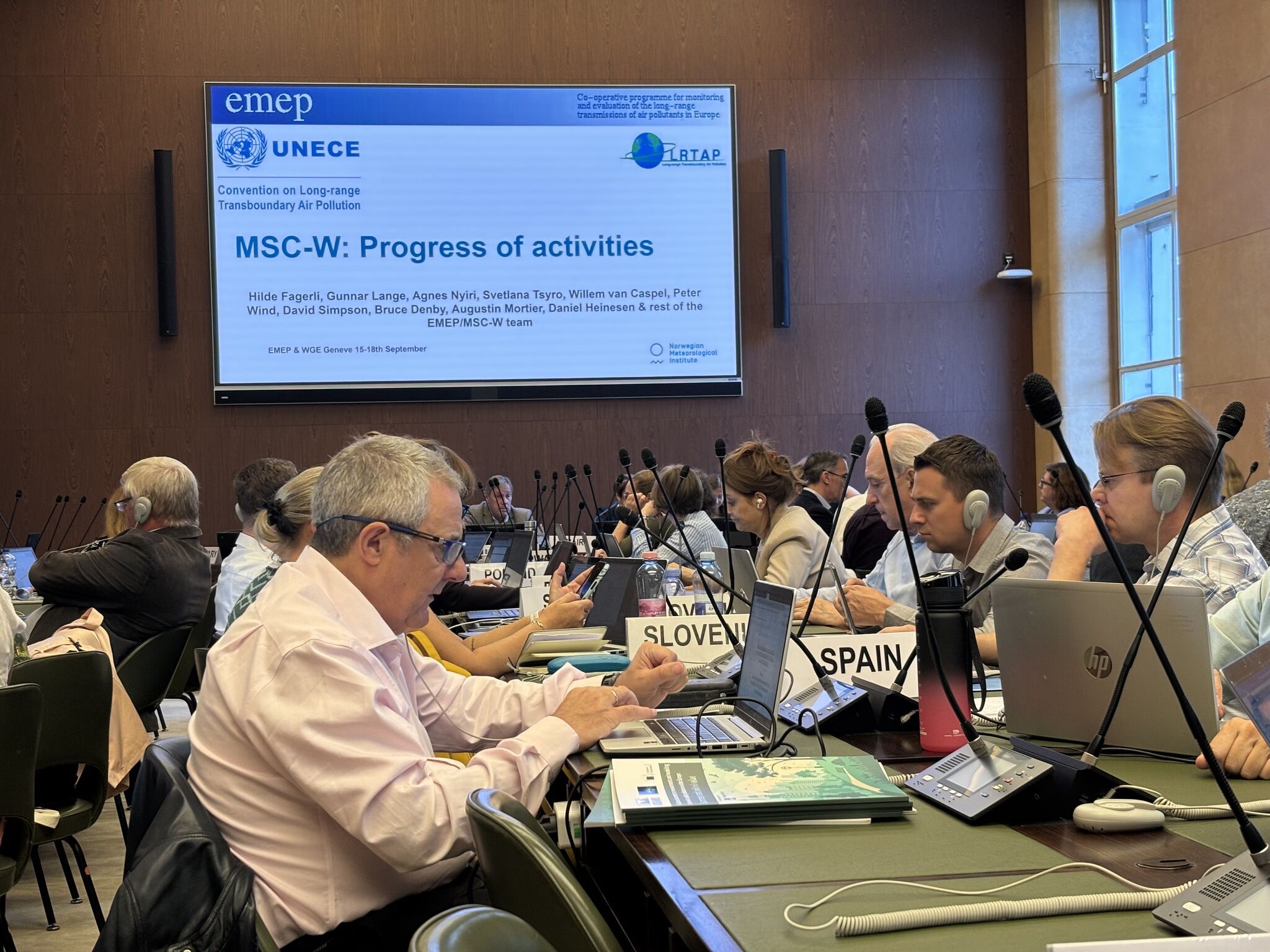
From 15th to 18th September 2025, the 11th joint session of the EMEP Steering Body and the Working Group on Effects under the UNECE Convention on Long-range Transboundary Air Pollution took place in Geneva. Representatives from over 25 countries, international organizations, scientific centres, and industry discussed progress and challenges in European air quality policy.
A central focus was the revision of the Gothenburg Protocol. Recent modelling and emission reduction scenarios were presented, highlighting their significance for health, biodiversity, and ecosystems. Participants emphasized the need to give equal weight to health and ecological objectives. In the long term, a zero-exceedance target for critical loads by 2100 is envisaged.
In the area of emission inventories, adjustment applications from several countries—especially for NMVOC and ammonia (NH₃) from agriculture—were reviewed and approved. The importance of high-quality emission data, regular reporting, and international cooperation was underlined. Updating the EMEP/EEA Air Pollutant Emissions Inventory Guidebook remains a priority. The Task Force on Emission Inventories and Projections (TFEIP) is working on a dedicated guideline for NMVOC specification and is promoting the development of region-specific emission factors. The next major revision of the Guidebook is planned for 2027.
Measurement and modelling efforts are focused on improving the detection of VOCs, ozone, and particulate matter. New measurement campaigns, the expansion of “supersites,” and the integration of satellite data aim to further enhance data quality. The impacts of climate change, particularly the increase in biogenic VOCs, are being increasingly considered.
Health risks from air pollutants remain high: particulate matter, NO₂, and ozone continue to cause significant disease and mortality. Materials, cultural heritage, forests, waters, and agricultural yields are also affected. Ozone remains the most important pollutant for vegetation and crop losses. Reducing ozone precursors, especially methane, is crucial for protecting ecosystems and harvests.
International cooperation, open data, and innovative monitoring and modelling approaches are key success factors for effective air quality policy. The recommendations of the ad hoc group on open data emphasize a pragmatic, stepwise approach to improving data access and the reusability of scientific information.
Financially, the budgets for 2026 were approved, with a strong emphasis on the need for sustainable funding for scientific activities. The session adopted recommendations to ensure the continuity and quality of scientific work despite global funding uncertainties.
The next joint session will take place in Geneva from 14 to 18 September 2026.
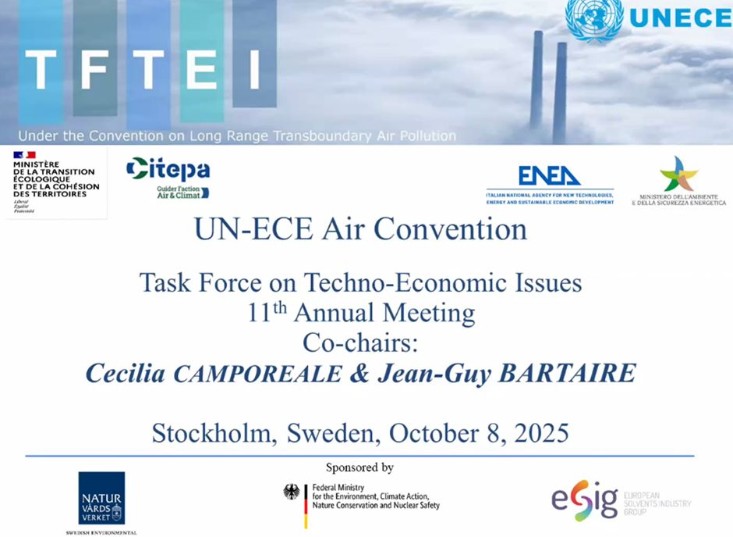
Participation on TFTEI Meeting
On 7th & 8th October 2025, experts from environmental authorities, industry, and international organizations discussed the second draft of the Gothenburg Protocol’s technical annexes. The aim is to make requirements more flexible and to better include non-Party countries, thus facilitating broader ratification.
Revision Process and Priorities:
The Executive Body (EB) defined eight key topics, including emission reductions, technical annexes, and issues such as black carbon, methane, and ammonia. The technical annexes are being fundamentally revised to better reflect different national capacities. Completion is now expected by 2027.
-
- Technical Annexes: Legally binding, set limits and requirements, but have often been too rigid for new accessions.
- Guidance Documents: Non-binding, provide technical recommendations and best practices, and are regularly updated.
- Three Ambition Levels:
- Moderate: Maintains current requirements (status quo).
- High: Stricter limits based on best available techniques (BAT).
- Tailored: Requirements adapted to the capacities of non-Party countries, focusing on gradual improvement and capacity building. Flexibility, transition periods, and sector-specific approaches are key elements.
Discussions and Outlook:
Participants emphasized the need for clear transition periods and a stepwise approach. Flexibility was welcomed, but requirements should not be set too low. The integration of new technologies (e.g., hydrogen, ammonia, heat pumps) and updated guidance for various sources were discussed. National experiences and international comparisons (OECD) provided valuable input.
Conclusion:
The current draft is seen as an important step forward, but political questions regarding complexity, fairness, and ambition remain open.
VOC Emissions
Preliminary Results of the VOC Survey soon Available.
The initial analysis of the VOC survey conducted by TNO indicates a positive trend: overall emissions have continued to decline by approximately 7%. VOC emissions from ESIG members also show a further decrease. Notably, ethanol emissions, which had risen last year, are now back on a downward trend.
The full report is currently being finalized in coordination with ESIG and is expected to be completed and published by the end of the year.