


Cefic news
Watch the latest episodes of “Voices of the Industry”: bringing onsite stories of innovation and transformation
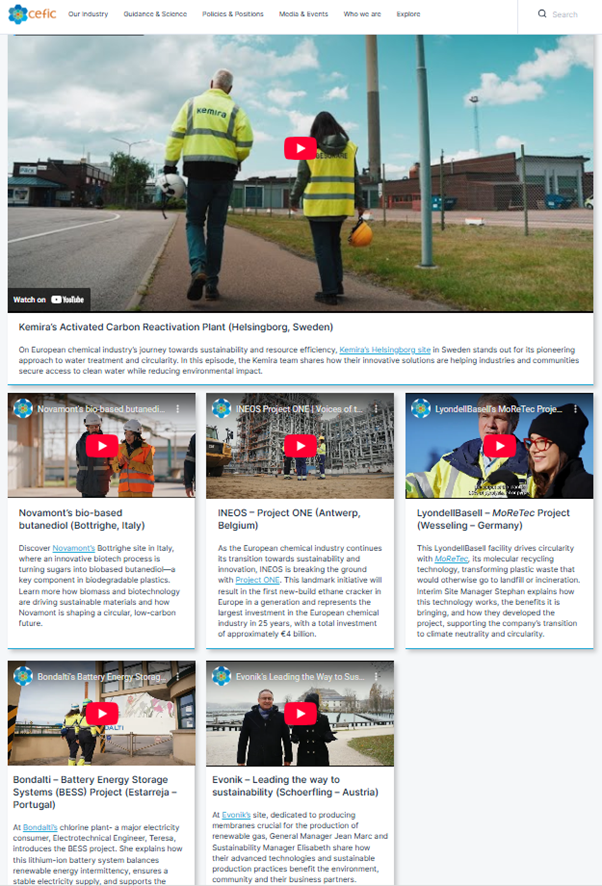
Series 2: INEOS, Novamont and Kemira
INEOS – Project ONE (Antwerp, Belgium)
As the European chemical industry continues its transition towards sustainability and innovation, INEOS is breaking the ground with Project ONE. This landmark initiative will result in the first new-build ethane cracker in Europe in a generation and represents the largest investment in the European chemical industry in 25 years, with a total investment of approximately €4 billion.
Novamont’s bio-based butanediol (Bottrighe, Italy)
Discover Novamont’s Bottrighe site in Italy, where an innovative biotech process is turning sugars into biobased butanediol—a key component in biodegradable plastics. Learn more how biomass and biotechnology are driving sustainable materials and how Novamont is shaping a circular, low-carbon future.
Kemira’s Activated Carbon Reactivation Plant (Helsingborg, Sweden)
On European chemical industry’s journey towards sustainability and resource efficiency, Kemira’s Helsingborg site in Sweden stands out for its pioneering approach to water treatment and circularity. In this episode, the Kemira team shares how their innovative solutions are helping industries and communities secure access to clean water while reducing environmental impact.
ESIG participation on CEFICs horizontal meetings
ESIG is regularly represented in Cefic’s central horizontal groups. By continuously participating in these cross-sectoral bodies, ESIG ensures that emerging developments are identified early, assessed from an industry-specific viewpoint, and integrated into its own work.
In recent months, the following topics have been in focus:
Chemicals Legislation & Digitalization:
The groups discussed progress on the EU Chemical Industry Action Plan, the REACH revision, the Omnibus package, and the harmonization of requirements under the Ecodesign for Sustainable Products Regulation (ESPR). The introduction of the Digital Product Passport and planned PFAS restrictions were also key discussion points.
Bioeconomy & Circular Economy:
Within the Bioeconomy and Circular Economy groups, topics included the ongoing consultation on the Circular Economy Act, promotion of alternative raw materials, Green Public Procurement, and flexible certification models. Funding opportunities and the European Competitiveness Fund were presented.
Safe Use & Exposure Assessment:
The Safe Use and Exposure groups are working on advancing exposure models, integrating human and environmental monitoring, and harmonizing data quality and definitions. Projects such as MEMORA for modular exposure models are being supported.
Product Footprinting & Sustainability:
Experts in Product Footprinting focus on integrating Life Cycle Assessment (LCA) and Product Carbon Footprints (PCF) into regulatory processes. Harmonization of data standards, development of new PEFCRs, and consideration of biogenicity and microplastics are key priorities.
Evaluation & Compliance:
The Evaluation groups address challenges posed by frequent updates to NAM test guidelines, preparation for the REACH revision, and development of coordinated legal strategies, such as handling compliance checks and read-across approaches.
Sustainable IT & Packaging:
In Sustainable IT, new methods for textile circularity, design for durability, and identification of Substances of Concern under ESPR are being developed. For packaging, the focus is on implementing the PPWR and identifying substances that hinder recycling.
By actively engaging in these cross-sectoral Cefic platforms, ESIG ensures that the interests of the solvents industry are represented, regulatory changes are anticipated, and members benefit from early insights into emerging trends and best practices.